 (800) 332-2866
Beat the Heat: Essential Prep Tips for the Summer Sun
Why Early Preparation Matters in Santa Ana
Southern California’s climate presents unique challenges for homeowners. The combination of intense dry heat and elevated UV levels creates conditions that make unprotected outdoor spaces and sun-exposed interiors uncomfortable during much of the year. For those living in Santa Ana and surrounding communities, the reality of rising temperatures affects daily comfort, energy consumption, and the longevity of outdoor furnishings.
Recent weather patterns show heat waves arriving earlier each season. What once began in late June now often appears in May or even April. Waiting until July to address sun protection means enduring weeks of discomfort and higher utility bills. This shift in seasonal patterns makes spring the ideal time to evaluate your current shade solutions and plan any necessary upgrades or repairs.
Research conducted by California energy studies demonstrates that properly installed awnings can meaningfully reduce indoor temperatures. When solar heat enters through windows and glass doors, it raises the ambient temperature inside your home, forcing air conditioning systems to work harder and longer. By blocking sunlight before it penetrates the glass, shade systems create a barrier that keeps interiors cooler naturally. This translates directly to lower cooling costs throughout the summer months.
For both residential and commercial properties, the financial impact of inadequate sun protection extends beyond energy bills. Furniture, flooring, and artwork exposed to direct sunlight fade faster. Window treatments deteriorate. Indoor spaces become less functional during peak hours. Taking proactive steps now prevents these issues from compounding over the coming months.

Inspect Before the Heat Arrives
If you already have awnings installed, spring offers the perfect window for thorough inspection and maintenance. The cooler temperatures and lower UV exposure during these months make it easier to spot issues that winter weather may have caused or that accumulated use has created over time.
Begin with a careful examination of the fabric itself. Look for signs of fading, which indicates UV damage that can weaken material integrity. Check for any tears, even small ones, as these will expand rapidly once summer winds pick up. Mildew appears as dark spots or patches, particularly in areas where moisture accumulated during winter rains. Fraying along seams or edges signals that the fabric is nearing the end of its useful life. Any of these conditions will worsen significantly under summer conditions.
Next, turn your attention to the frame and mechanical components. Inspect arms, hinges, and mounting brackets for signs of wear or corrosion. Coastal proximity accelerates metal degradation, making this especially important for properties in areas with salt air exposure. If your system is motorized, test the motor function now rather than discovering problems during the first heat wave. Listen for unusual sounds, check that retraction and extension operate smoothly, and verify that any wind sensors or remote controls function properly.
Fabric cleaning should follow manufacturer guidelines to avoid damage. Different materials require different care approaches. Proper cleaning removes dirt, pollen, and organic material that can degrade fabric over time or create unsightly stains. Regular maintenance extends the life of your investment and ensures optimal performance when you need it most.
If inspection reveals significant fabric wear, consider replacement before summer arrives. Discovering fabric failure during a heat wave means enduring maximum sun exposure while waiting for repairs. Spring scheduling allows you to choose from full inventory, secure preferred installation dates, and complete the work during comfortable weather conditions.
Flexible Coverage for Outdoor Living Spaces
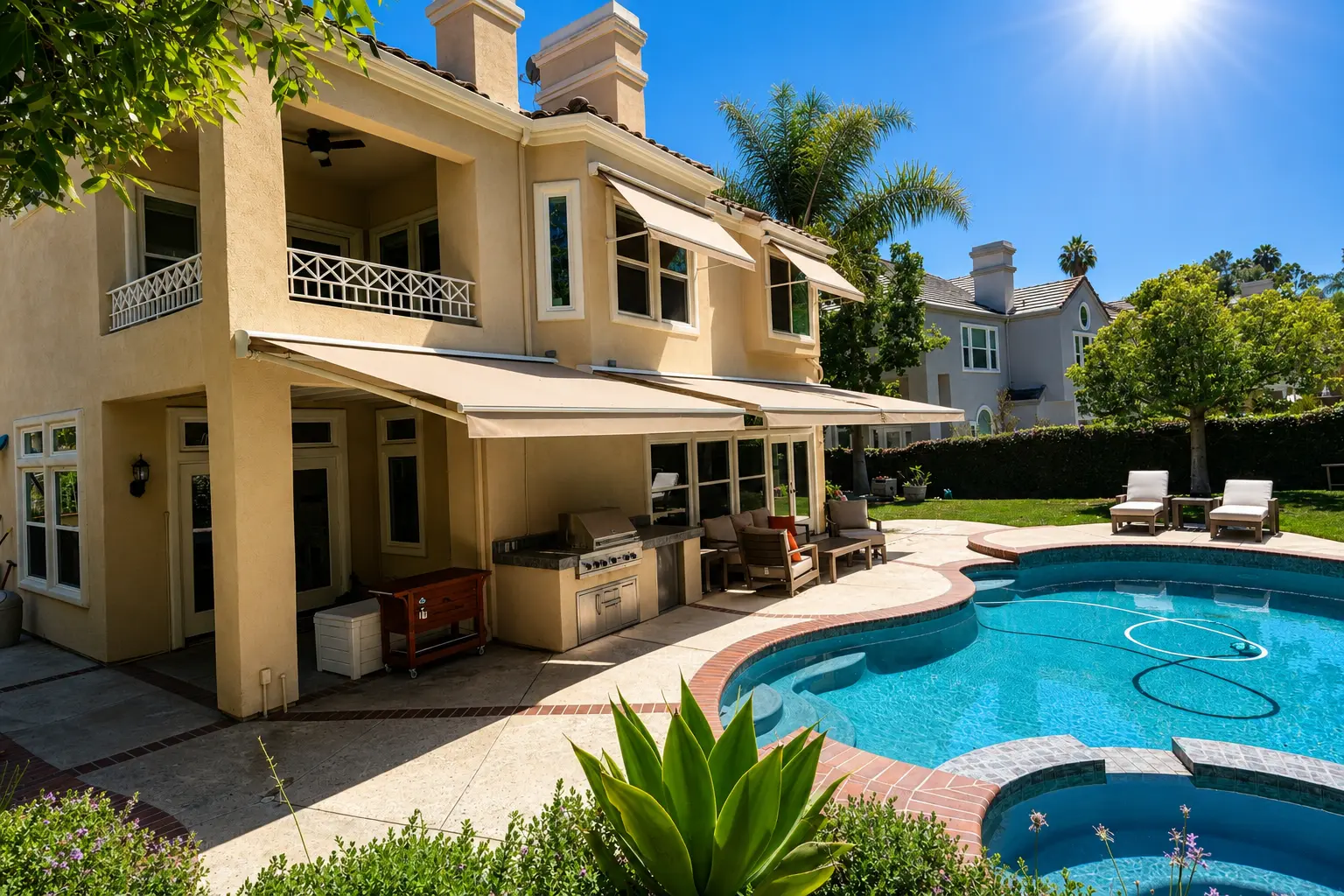
For patios and areas with sliding glass doors, retractable systems offer versatility that matches Southern California’s variable conditions. These solutions extend when shade is needed and retract during cooler evenings, windy conditions, or when you want full sun exposure.
The Elite, Uni-Lux, and Econo-Lux models each serve different needs and budgets while providing the core benefit of on-demand shade control. Elite systems offer premium construction and extended projection capabilities for larger coverage areas. The Uni-Lux provides a balance of quality and value suitable for most residential applications. Econo-Lux delivers essential functionality at an accessible price point for homeowners prioritizing budget considerations.
Cassette options add an extra layer of protection when the system is retracted. The cassette housing completely encloses the fabric, shielding it from weather exposure, dust, and debris. This feature particularly benefits properties in areas with significant wind-blown dust or those surrounded by trees that drop leaves and organic material. Protected fabric lasts longer and requires less frequent cleaning.
Retractable systems shine in Santa Ana’s climate because they adapt to daily and seasonal variation. Spring mornings may be pleasant enough to enjoy full sun, while afternoon heat requires maximum shade. Summer evenings cool enough to retract the awning for stargazing. The flexibility matches how people actually use outdoor spaces throughout the year.
Protecting Glass Doors and Covered Patios
Drop shade systems address a specific challenge common in Santa Ana homes: large glass door openings and stucco overhangs that create covered patio spaces. These architectural features provide indoor-outdoor flow and visual openness but can become heat traps when sun pours through the glass or reflects off patio surfaces.
The Sun-Pro, Sun-Pro Jr., and Patio-Pro systems mount above the opening and deploy vertically, creating a shade barrier that blocks direct sunlight while still allowing filtered light to enter. This differs from traditional awnings that project outward. The vertical deployment works particularly well for spaces where overhead clearance is limited or where architectural elements prevent traditional awning installation.
These systems excel at reducing glare, which affects both comfort and functionality. Glare on television screens, computer monitors, and mobile devices makes indoor spaces less usable during peak sun hours. It creates eye strain and forces people to adjust window coverings, blocking views and natural light entirely. Drop shades filter the harsh direct light while maintaining visibility and ambient brightness.
The heat reduction benefit is substantial. Glass doors facing south or west receive intense solar exposure during summer afternoons. Even with interior window treatments, significant heat transfers into the living space. Exterior shade stops this heat before it reaches the glass, maintaining cooler indoor temperatures without blocking the view or making rooms feel closed off.

Permanent Protection with Added Curb Appeal
Stationary awnings provide constant protection for windows and entryways that receive consistent sun exposure. The Riviera, Dome, Orleans, and Spear models each offer distinctive aesthetic styles that complement different architectural designs while delivering year-round shade benefits.
These permanent installations work particularly well for east and west-facing windows that receive intense angled sunlight during morning or afternoon hours. Unlike overhead sun, which awnings naturally deflect, low-angle sun penetrates deep into rooms and creates significant heat buildup. Stationary window coverage blocks this exposure consistently without requiring daily adjustment.
Beyond functional benefits, stationary awnings enhance curb appeal and property value. They add architectural interest, create visual depth on flat facades, and provide color accents that can tie together exterior design elements. For commercial properties, they create prominent branding opportunities and make storefronts more inviting by suggesting cooler, more comfortable interior conditions.
The Robusta retractable window awning offers an alternative for homeowners who want window protection with seasonal flexibility. This system combines the targeted coverage of a window awning with the ability to retract during winter months when solar heat gain is desirable or during storms when fully exposed windows are preferred.
For properties in Santa Ana looking to reduce energy consumption while improving exterior appearance, stationary solutions deliver both benefits simultaneously. The shade they provide works every day, reducing cooling costs throughout the entire summer season without requiring any operation or maintenance beyond occasional cleaning.
Planning for custom manufacturing and installation timelines is essential when considering new shade systems. Unlike mass-produced items available for immediate purchase, quality awnings are manufactured to exact specifications for each installation location. This ensures proper fit, optimal function, and professional appearance, but it requires lead time between order and installation. Spring orders typically process faster than summer requests when demand peaks. Securing your installation date now means having protection in place before temperatures climb into the uncomfortable range. Service areas throughout Orange County, San Diego, Los Angeles, and the Inland Empire benefit from local manufacturing capabilities that have been refined over more than four decades of operation.