 (800) 332-2866


Motorized vs. Manual Awnings & Drop Shades: Which Suits You Best?
Shopping for outdoor shade often starts with a frustrating realization: DIY big-box store kits leave you guessing on installation, online shade retailers offer zero custom structural support, and massive national chains push one-size-fits-all solutions. Upgrading your patio shouldn’t mean compromising on fit or longevity.
At Accent Awnings®, we craft every retractable awning and drop shade to your exact home specs. The real decision comes down to how you want to operate it: manual hand crank or motorized control system? Neither option is inherently “better,” the right choice depends entirely on your ease of use, your home’s mounting requirements, the physical size of your shade, and your overall budget.
When Should You Choose a Manual Crank Retractable Shade?
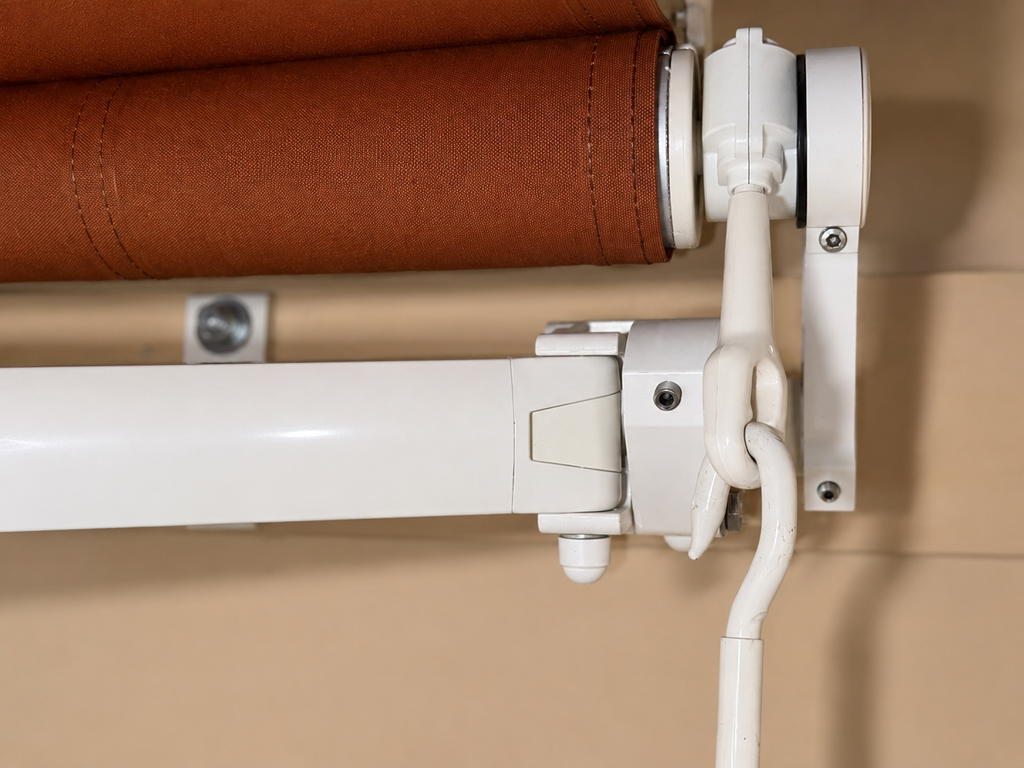
Manual hand-crank systems rely on a straightforward mechanical gear mechanism. You operate the shade by hooking a hand crank into a loop and rotating it to extend or retract the fabric.
- Budget-Friendly Upfront Cost: Manual shades bypass electrical wiring and motor components, making them the most cost-effective solution for tight budgets.
- Simple Mechanics: With no electrical connections or motors involved, long-term mechanical maintenance stays remarkably minimal.
- Best for Smaller Spans: Manual cranks perform exceptionally well on small-to-medium patio awnings or smaller drop shades where fabric weight is manageable.
When Is a Motorized Control System Essential?
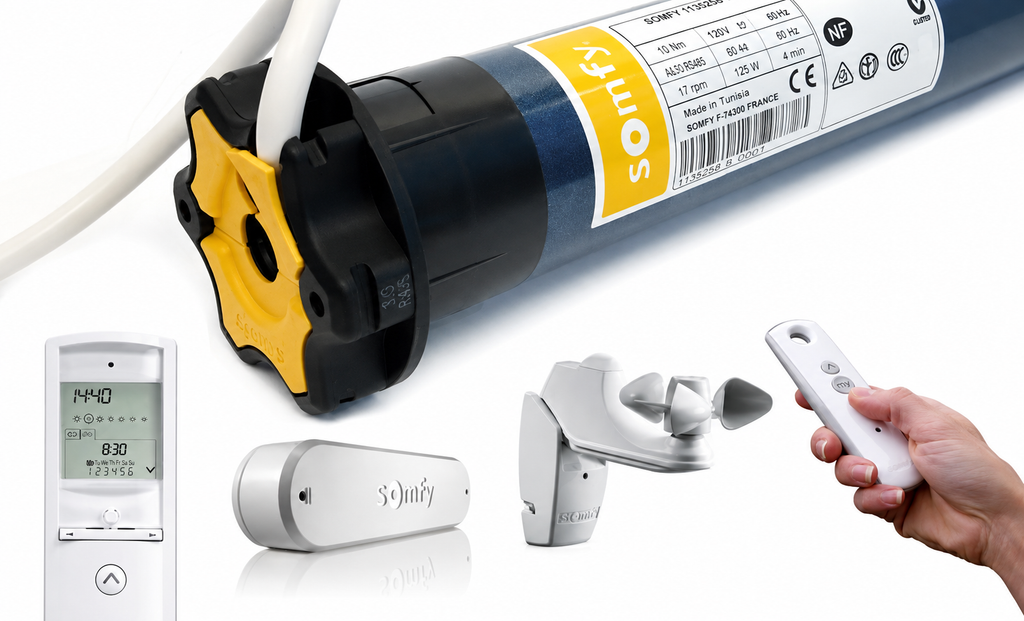
Motorized awnings replace manual labor with seamless, hardwired power. With the press of a button, internal motors smoothly expand or roll up your shade structure.
- Large Architectural Spans: The larger an awning is, the heavier the internal spring arms become. Manually cranking a massive 20-foot patio shade takes significant physical effort. Motorization eliminates physical strain completely.
- Roof Mount Installations: If your shade must be installed directly onto your roof line rather than a flat wall, reach and angle constraints make manual cranking nearly impossible. Roof-mounted shades almost always require a motorized setup.
- Clean, Professional Hardwiring: Unlike cheap plug-in units with dangling extension cords, professional motorized systems are hardwired directly into your home’s electrical system with no exposed cables.
- Timer & Sensor Needs: When interested in a timer or sun sensor system that extends your awning or lowers your shade at a specific time or sun exposure each day, a motorized unit is required. The same requirement goes for a wind sensor feature to ensure your awning is protected when heavy winds pick up and you’re not present to retract it yourself.
Key Benefits at a Glance: Manual vs. Motorized
To help homeowners compare manual and motorized awnings and shades, here is a clear breakdown of how each control option differs across key structural, functional, and performance factors:
- Mounting Compatibility: Wall and soffit mounts support both manual and motorized units. Roof mounts strictly require motorized operation for ease of use and safety.
- Weather Protection: Motorized systems can integrate automatic wind sensors that retract your shade during sudden gust events like the Santa Ana winds—protecting your investment even when you aren’t home.
- Control Options: Motorized systems link directly to wall switches, multi-channel hand remotes, timer systems or smart home automation. Manual systems use a dedicated detachable hand crank.
- Electrical Needs: Manual systems require zero power. Motorized systems utilize concealed, hardwired electrical lines for a clean exterior appearance.
- Warranty Coverage: Both manual crank mechanisms and motorized systems from Accent Awnings® come backed by a full 5-year warranty.
Frequently Asked Questions
Can I convert a manual retractable awning to motorized later?
Yes. Most high-quality custom frames allow retrofitting an internal tubular motor at a later date, provided the initial installation accounts for proper electrical access.
What happens to a motorized shade if strong winds hit unexpectedly?
When fitted with automated wind sensors, motorized awnings detect dangerous wind oscillations, such as severe Santa Ana winds, and automatically trigger full retraction to protect the frame and fabric from structural damage.
How are motorized awnings powered without visible wires?
Professional installations do not use exterior plug-in cords or extension cables. Motorized systems are hardwired behind the mounting brackets directly into your home’s electrical setup.
Does a larger awning really make manual cranking difficult?
Yes. Larger retractable awnings require stronger spring tension inside the projection arms to keep the fabric taut. Cranking a large shade manually requires continuous torque and physical strength.

Why Accent Awnings® Is Your Long-Term Outdoor Partner
An awning isn’t a temporary seasonal accessory; it is an architectural upgrade to your living space. Choosing between manual and motorized isn’t about buying the most expensive gear, it’s about building a custom shade solution that fits your physical layout, lifestyle, and budget.
At Accent Awnings®, everything we manufacture is 100% custom-built. Whether you need a simple manual drop shade for a cozy side porch or an automated, wind-sensing roof-mounted awning for a sprawling backyard deck, our team guides you from design through seamless installation. Plus, with a robust 5-year warranty on both manual and motorized drive components, you can relax under your shade with complete confidence for years to come.